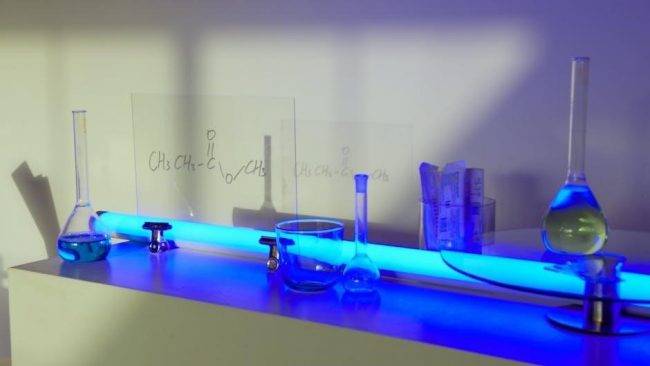
Chemical reactions are fundamental processes, classified by product, reactants, outcome, and mechanism – including gas-forming and precipitation types.
Understanding these reactions is essential for diverse applications, from everyday heating and cooking to optimizing industrial processes and managing waste.
What are Chemical Reactions?
Chemical reactions represent the rearrangement of atoms and molecules to form new substances. These transformations involve the breaking and forming of chemical bonds, resulting in changes in the composition and properties of matter. They aren’t simply mixing; they create entirely new substances.
Chemists categorize these reactions in multiple ways – by the type of product formed, the reactants involved, the overall outcome, or the specific reaction mechanism. This multifaceted classification allows for a deeper understanding of how and why reactions occur. For instance, some reactions release energy (exothermic), while others require energy input (endothermic).
Crucially, reactions can also be described as synthesis (combining substances), decomposition (breaking down substances), single replacement, double replacement, or combustion, each with distinct characteristics. Understanding these classifications is key to predicting reaction outcomes and controlling chemical processes.
Importance of Studying Chemical Reactions
Studying chemical reactions is paramount because they underpin nearly all aspects of our world. From the biological processes within our bodies – digestion, respiration – to industrial manufacturing and environmental changes, reactions are constantly occurring.
A thorough understanding allows us to optimize industrial processes, leading to increased efficiency and reduced waste. Speeding up reactions can significantly improve production rates, while controlling them minimizes harmful byproducts. Furthermore, comprehending reaction mechanisms is vital for developing new materials and technologies.
Beyond practical applications, studying reactions provides insight into fundamental scientific principles. It allows us to predict how substances will interact, understand energy transformations, and ultimately, manipulate matter to achieve desired outcomes. This knowledge is crucial for addressing global challenges like climate change and sustainable energy production.
Types of Chemical Reactions
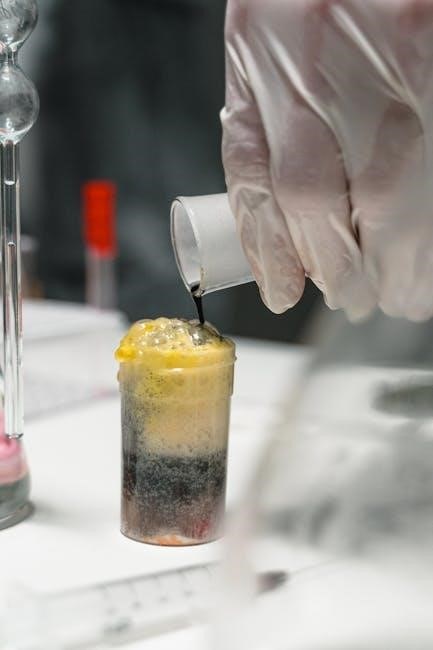
Reactions encompass synthesis, decomposition, single replacement, double replacement, and combustion – each categorized by reactant changes and resulting product formations.
Synthesis Reactions
Synthesis reactions involve the combination of two or more reactants to form a single, more complex product. These reactions are fundamentally about building something new from simpler components, often releasing energy in the process, though not always.
A classic example is the formation of water (H₂O) from hydrogen (H₂) and oxygen (O₂). The general form of a synthesis reaction is A + B → AB. These reactions are crucial in creating compounds from their elements.
Consider the synthesis of sodium chloride (NaCl) from sodium (Na) and chlorine (Cl₂). This is a highly exothermic reaction, releasing significant heat. Synthesis reactions aren’t limited to just two reactants; multiple substances can combine. Understanding these reactions is key to predicting product formation and managing energy changes within a chemical system.
Decomposition Reactions
Decomposition reactions are essentially the opposite of synthesis – a single compound breaks down into two or more simpler substances. These reactions typically require an input of energy, such as heat, light, or electricity, to overcome the bonds holding the compound together.
A common example is the decomposition of calcium carbonate (CaCO₃) into calcium oxide (CaO) and carbon dioxide (CO₂) when heated. The general form is AB → A + B. These reactions are vital in various industrial processes and natural phenomena.
Consider the decomposition of water (H₂O) into hydrogen (H₂) and oxygen (O₂) through electrolysis. Understanding decomposition reactions helps predict the products formed when a compound is unstable or subjected to specific conditions, and is crucial for controlling chemical processes.
Single Replacement Reactions
Single replacement reactions, also known as single displacement reactions, involve one element replacing another in a compound. These reactions follow a general pattern: A + BC → AC + B, where A is a more reactive element than B. Reactivity is often determined by the activity series for metals or halogens.
For instance, if zinc (Zn) is added to hydrochloric acid (HCl), zinc replaces hydrogen, forming zinc chloride (ZnCl₂) and hydrogen gas (H₂). The key is that the replacing element must be more reactive to displace the other.
Predicting whether a single replacement reaction will occur requires consulting an activity series; Understanding these reactions is essential for predicting product formation and assessing the feasibility of a given chemical change, impacting various applications.
Double Replacement Reactions
Double replacement reactions, also called metathesis reactions, involve the exchange of ions between two reactants. The general form is AB + CD → AD + CB. Unlike single replacement, no element is directly replacing another; instead, ions switch partners.
These reactions are often driven by the formation of a precipitate (an insoluble solid), a gas, or water. For example, mixing silver nitrate (AgNO₃) with sodium chloride (NaCl) results in silver chloride (AgCl) precipitate and sodium nitrate (NaNO₃).
Predicting double replacement reactions requires knowing solubility rules to determine if a precipitate will form. These reactions are crucial in various chemical processes, including water purification and analytical chemistry, demonstrating ion exchange principles.
Combustion Reactions
Combustion reactions are rapid reactions between a substance with an oxidant, usually oxygen, to produce heat and light. They are fundamentally exothermic, releasing energy in the form of thermal and radiant energy. A common example is the burning of methane (CH₄) with oxygen (O₂) to form carbon dioxide (CO₂) and water (H₂O).
These reactions always involve a fuel source and an oxidizer. Complete combustion occurs when there’s sufficient oxygen, yielding carbon dioxide and water. Incomplete combustion, due to limited oxygen, produces carbon monoxide (CO) and soot (C) alongside the other products.
Combustion is essential for everyday heating and cooking, powering internal combustion engines, and generating electricity, highlighting its widespread practical applications.

Chemical Equations and Balancing
Chemical equations represent reactions using symbols and formulas; balancing ensures the law of conservation of mass is upheld, showing equal atoms.
Writing Chemical Equations
Crafting chemical equations is a cornerstone of understanding reactions, demanding precision and adherence to established conventions. Reactants, the starting substances, are positioned on the left-hand side of the equation, while products, the resulting substances, appear on the right. An arrow (→) visually separates these components, indicating the direction of the reaction.
Correctly representing chemical formulas is paramount; each element’s symbol must accurately reflect its composition within a molecule or compound. Coefficients, numbers placed before formulas, denote the stoichiometric quantities of each substance involved. These coefficients are crucial for balancing the equation, ensuring mass conservation.
Furthermore, understanding the states of matter – solid (s), liquid (l), gas (g), and aqueous (aq) – is vital for a complete and informative equation. Including these states provides a comprehensive depiction of the reaction conditions and physical characteristics. A well-written equation serves as a concise yet powerful summary of a chemical transformation.
Balancing Chemical Equations
Balancing chemical equations is founded on the law of conservation of mass – matter isn’t created or destroyed in a chemical reaction. This means the number of atoms for each element must be identical on both reactant and product sides. It’s achieved by adjusting coefficients, not subscripts within chemical formulas.
Begin by inventorying each element present in the equation. Systematically adjust coefficients, often starting with the most complex molecule, until atom counts match. Employ trial and error, but prioritize a logical approach. Fractions can be used temporarily, then multiplied to achieve whole-number coefficients.
Balancing can be challenging for complex reactions, sometimes requiring strategic adjustments and patience. A correctly balanced equation ensures quantitative relationships between reactants and products, essential for stoichiometric calculations and predicting reaction yields. Mastering this skill is fundamental to understanding chemical transformations.
States of Matter in Chemical Equations
Representing states of matter is crucial for a complete chemical equation. These are indicated using parentheses with subscripts: (s) for solid, (l) for liquid, (g) for gas, and (aq) for aqueous – dissolved in water. Including these clarifies the physical form of each substance involved in the reaction.
For instance, NaCl(s) denotes solid sodium chloride, while NaCl(aq) represents it dissolved in water, forming ions. Gases are often essential in combustion reactions, indicated by (g). Understanding these notations is vital for predicting reaction behavior and interpreting experimental results.
Accurate state symbols enhance the clarity and precision of chemical equations, providing a more comprehensive depiction of the reaction process. They are fundamental for predicting solubility, phase changes, and overall reaction feasibility.
Factors Affecting Reaction Rates
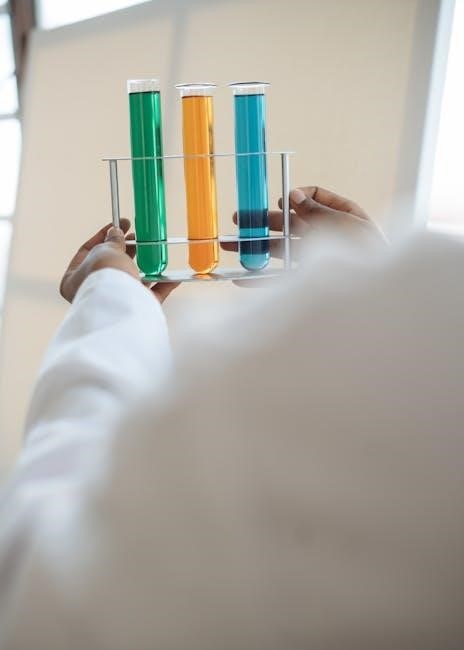
Reaction rates are significantly impacted by temperature, concentration, and catalysts; speeding up processes improves industrial efficiency and mitigates harmful waste production.
Temperature and Reaction Rate
Temperature exerts a profound influence on the speed of chemical reactions. Generally, increasing the temperature provides molecules with greater kinetic energy, leading to more frequent and forceful collisions.
These energetic collisions are more likely to overcome the activation energy barrier – the minimum energy required for a reaction to occur – thus accelerating the reaction rate. A common rule of thumb suggests that for many reactions, the rate approximately doubles for every 10°C increase in temperature.
However, this is a generalization, and the exact relationship between temperature and reaction rate is described by the Arrhenius equation, which quantifies the exponential dependence of the rate constant on temperature. Conversely, decreasing the temperature typically slows down reaction rates, as fewer molecules possess sufficient energy to react.
Therefore, controlling temperature is a crucial aspect of managing and optimizing chemical processes.
Concentration and Reaction Rate
Concentration of reactants plays a vital role in determining the speed at which a chemical reaction proceeds. Increasing the concentration of reactants generally leads to a higher reaction rate, as there are more reactant molecules present within a given volume.
This increased density results in more frequent collisions between reactant molecules, enhancing the probability of successful reactions. The precise relationship between concentration and reaction rate is defined by the rate law, which is experimentally determined for each specific reaction.
For many reactions, the rate is directly proportional to the concentration of one or more reactants, meaning that doubling the concentration doubles the rate. Conversely, decreasing the concentration typically slows down the reaction rate due to fewer available reactant molecules.
Therefore, manipulating reactant concentrations is a key strategy for controlling reaction speed.
Catalysts and Reaction Rate
Catalysts are substances that significantly accelerate chemical reaction rates without being consumed in the process themselves. They achieve this by providing an alternative reaction pathway with a lower activation energy – the minimum energy required for a reaction to occur.
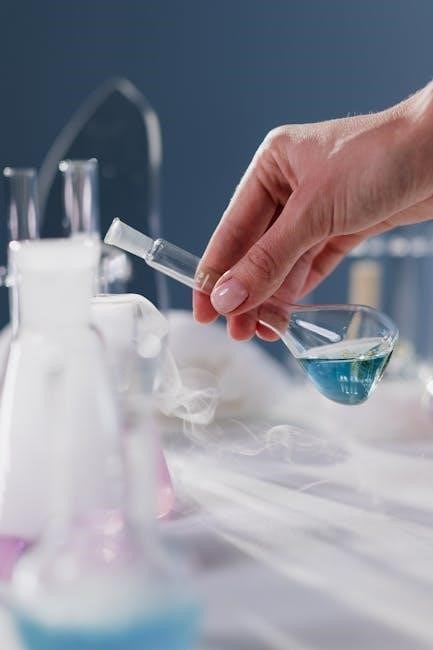
By lowering the activation energy, catalysts enable a greater proportion of reactant molecules to overcome the energy barrier and form products, thus speeding up the reaction. Catalysts do not alter the equilibrium position of a reaction; they simply help it reach equilibrium faster.
There are two main types of catalysts: homogeneous catalysts, which are in the same phase as the reactants, and heterogeneous catalysts, which are in a different phase. Speeding up reactions is key to improving industrial processes.
Catalysts are crucial for many industrial applications.
Energy Changes in Chemical Reactions
Reactions release or absorb energy, categorized as exothermic (releasing heat) or endothermic (absorbing heat), impacting surrounding temperatures and driving processes.
Exothermic Reactions
Exothermic reactions are processes that release energy, typically in the form of heat, into the surroundings. This energy release results in a temperature increase of the environment. A classic example is combustion, like burning wood or natural gas, which provides heat for cooking and heating systems.
In an exothermic reaction, the chemical bonds formed in the products are stronger than the bonds broken in the reactants. This difference in bond energy is released as heat. Because energy is leaving the system, exothermic reactions have a negative enthalpy change (ΔH < 0).
Many everyday occurrences demonstrate exothermic behavior. Setting cement, neutralizing an acid with a base, and even the human metabolic processes are all examples of reactions that release energy. Understanding these reactions is crucial for controlling and harnessing energy in various applications.
Endothermic Reactions
Endothermic reactions are processes that absorb energy from their surroundings, usually in the form of heat. This absorption leads to a decrease in the temperature of the environment. Unlike exothermic reactions, endothermic reactions require a continuous input of energy to proceed.
In these reactions, the chemical bonds formed in the products are weaker than those broken in the reactants. Consequently, energy is needed to break the stronger reactant bonds. This results in a positive enthalpy change (ΔH > 0), signifying energy entering the system.
Examples include melting ice, evaporating water, and photosynthesis in plants. Cooking also often involves endothermic processes, as heat is required to break down food molecules. Recognizing endothermic reactions is vital for understanding energy requirements in chemical and biological systems.

Real-World Applications of Chemical Reactions

Chemical reactions are integral to cooking, heating systems, and processes like gas formation and precipitation, demonstrating their pervasive influence on daily life.
Chemical Reactions in Cooking
Cooking is fundamentally a series of carefully controlled chemical reactions that transform raw ingredients into delicious and digestible meals. Many of these reactions are oxidation-reduction (redox) processes, like the browning of fruits and vegetables when exposed to air – a form of enzymatic browning. The Maillard reaction, a non-enzymatic browning, occurs when amino acids and reducing sugars are heated, creating complex flavors and aromas in baked goods, seared meats, and roasted coffee.
Caramelization, another crucial process, involves the thermal decomposition of sugars, yielding a rich, nutty flavor and brown color. Baking relies heavily on chemical reactions; baking soda (sodium bicarbonate) and baking powder (a combination of bicarbonate, an acid, and a drying agent) release carbon dioxide gas, causing dough to rise. Even simple acts like boiling an egg involve protein denaturation – a change in protein structure due to heat – resulting in a solid texture. Understanding these reactions allows cooks to predict and control outcomes, enhancing both flavor and texture.
Chemical Reactions in Heating Systems
Many heating systems rely on chemical reactions to generate warmth. Combustion, a rapid reaction between a substance with an oxidant, usually oxygen, is central to most systems. Natural gas furnaces, for example, burn methane (CH4) with oxygen (O2), producing carbon dioxide (CO2), water (H2O), and a significant amount of heat – an exothermic reaction essential for everyday heating.
Wood-burning stoves also utilize combustion, oxidizing the complex organic molecules in wood. Even seemingly simple heating pads can involve chemical reactions; some utilize iron oxidation, releasing heat as iron reacts with oxygen; The efficiency of these systems depends on complete combustion, minimizing harmful byproducts like carbon monoxide. Understanding the stoichiometry and energy changes involved in these reactions is crucial for designing and optimizing heating technologies, ensuring safe and effective heat production.
Gas-Forming Reactions
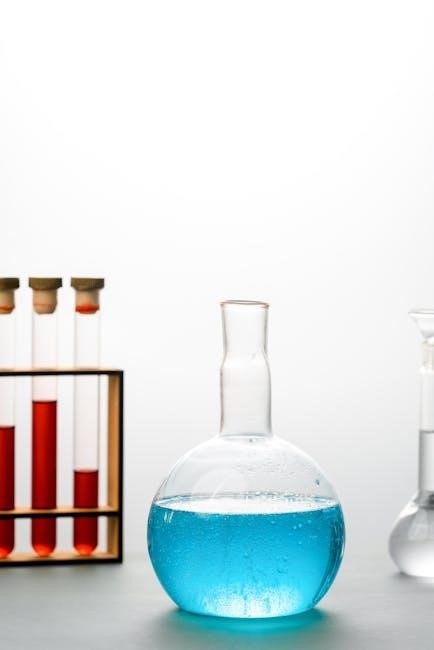
Gas-forming reactions are a significant category within chemistry, characterized by the production of one or more gaseous products. A common example is the reaction between an acid and a carbonate, like hydrochloric acid (HCl) reacting with calcium carbonate (CaCO3), yielding calcium chloride (CaCl2), water (H2O), and carbon dioxide (CO2) gas. These reactions are frequently observed in laboratory settings and natural processes.
Another type involves the decomposition of unstable compounds, releasing gases like nitrogen or oxygen. Furthermore, many organic reactions produce gaseous byproducts. Understanding these reactions is vital in various applications, including effervescence in beverages, volcanic eruptions, and industrial processes requiring gas generation. Identifying the reactants and predicting the gaseous products are key skills when studying this reaction type.
Precipitation Reactions
Precipitation reactions are a crucial type of double displacement reaction, occurring when two soluble ionic compounds in aqueous solution combine to form an insoluble solid, known as a precipitate. This precipitate separates from the solution as a solid. Solubility rules are essential for predicting whether a precipitate will form; these rules dictate which ionic compounds are soluble or insoluble in water.
For instance, mixing silver nitrate (AgNO3) and sodium chloride (NaCl) results in the formation of silver chloride (AgCl), a white precipitate, and sodium nitrate (NaNO3), which remains dissolved. Identifying potential precipitates requires understanding ion charges and applying solubility guidelines. These reactions are widely used in analytical chemistry for qualitative analysis and in industrial processes for purification and separation.
Reaction Mechanisms
Reaction mechanisms detail the step-by-step sequence of elementary reactions, including intermediate steps, that describe how reactants transform into products during a chemical change.
Understanding Reaction Pathways
Delving into reaction pathways involves dissecting the precise sequence of molecular events that transpire during a chemical reaction. It’s not simply about reactants becoming products; it’s about how that transformation unfolds. These pathways are rarely a single, concerted step. Instead, they typically consist of multiple elementary steps, each representing a discrete molecular event like bond breaking or bond formation.
Chemists utilize various techniques, both experimental and computational, to elucidate these pathways. Understanding these steps is crucial because the overall rate of a reaction is often dictated by the slowest step – the rate-determining step. Identifying this step allows for targeted interventions to accelerate the reaction or steer it towards desired products. Furthermore, knowledge of the pathway helps predict the formation of byproducts and optimize reaction conditions for maximum efficiency.
Speeding up chemical reactions is key to improving industrial processes or mitigating unwanted or harmful waste, requiring chemists to design around documented reaction pathways.
Intermediate Steps in Reactions
Within a reaction pathway, intermediate steps represent transient molecular species that exist for a fleeting moment between reactants and final products. These intermediates aren’t starting materials or end results; they’re formed and consumed during the reaction’s progression. Identifying these intermediates is vital for a comprehensive understanding of the reaction mechanism.
These fleeting species are often highly reactive and difficult to isolate directly. Their existence is typically inferred through indirect evidence, such as kinetic studies, spectroscopic analysis, or computational modeling. Understanding the structure and properties of intermediates allows chemists to predict the reaction’s selectivity and potential side reactions.
Each elementary step involves a transition state, a high-energy configuration where bonds are partially broken and formed. The energy difference between reactants and the transition state determines the rate of that step. Analyzing these intermediate steps is crucial for optimizing reaction conditions and designing more efficient chemical processes.